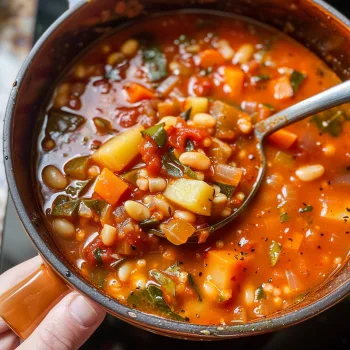
There’s something incredibly comforting about a steaming bowl of Classic Minestrone Soup on a chilly evening. This hearty Italian vegetable soup brings together fresh vegetables, tender beans, and pasta in a rich tomato broth that’ll warm you from the inside out. Whether you’re looking for a nutritious weeknight dinner or meal prep option, this minestrone recipe delivers authentic flavors without requiring hours in the kitchen.
Table of Contents
Essential Ingredients for Perfect Minestrone
Choosing Your Vegetables Wisely
The beauty of Italian vegetable soup lies in its flexibility, though certain vegetables form the foundation of great minestrone. Start with the classic soffritto base of onions, carrots, and celery, which provides depth of flavor. Additionally, zucchini adds a tender texture while green beans contribute a pleasant snap. You can certainly substitute or add vegetables like bell peppers, potatoes, or cabbage depending on the season. Just remember to cut everything into uniform, bite-sized pieces so they cook evenly and make eating easier.
Selecting the Right Beans and Pasta
Traditional minestrone typically includes two types of beans for varied texture and visual appeal. Kidney beans offer a creamy consistency and slightly sweet flavor, whereas cannellini beans provide a buttery smoothness. As for pasta, small shapes like ditalini, elbow macaroni, or small shells work best because they’re easy to scoop with a spoon. However, avoid adding the pasta too early since it’ll absorb too much liquid and become mushy. Instead, cook it separately or add it during the final stages of cooking.
Ingredients
| Ingredient | Quantity |
|---|---|
| Olive oil | 2 tablespoons |
| Yellow onion, diced | 1 large |
| Carrots, diced | 2 medium |
| Celery stalks, diced | 2 large |
| Garlic cloves, minced | 4 |
| Zucchini, diced | 1 medium |
| Green beans, trimmed and cut | 1 cup |
| Diced tomatoes | 28 oz can |
| Tomato paste | 2 tablespoons |
| Vegetable broth | 6 cups |
| Kidney beans, drained | 15 oz can |
| Cannellini beans, drained | 15 oz can |
| Ditalini pasta | 1 cup |
| Fresh spinach | 2 cups |
| Dried oregano | 1 teaspoon |
| Dried basil | 1 teaspoon |
| Bay leaf | 1 |
| Salt | To taste |
| Black pepper | To taste |
| Parmesan cheese, grated | For serving |
Step-by-Step Preparation Techniques
Building Flavor Through Proper Sautéing
The secret to deeply flavored soup starts with properly sautéing your aromatics in olive oil. Heat your pot over medium heat until the oil shimmers, then add the diced onions, cooking them until they become translucent and slightly golden. Next, toss in the carrots and celery, stirring occasionally for about five minutes until they begin to soften. Finally, add the minced garlic and cook for just one minute, being careful not to burn it since burnt garlic turns bitter and can ruin your entire batch.
If you enjoyed this comforting soup, you might also love these delicious recipes: Mexican Street Corn Soup
Layering Ingredients for Optimal Texture
Timing is everything when it comes to adding ingredients to your hearty soup. After sautéing the base vegetables, stir in the tomato paste to coat everything evenly, cooking for about two minutes to remove its raw taste. Then pour in the diced tomatoes and broth, bringing everything to a gentle boil. At this point, add your hardier vegetables like green beans, along with the herbs and seasonings. Wait until the soup has simmered for about twenty minutes before adding quicker-cooking ingredients like zucchini and spinach.

Cooking Methods and Time Management
Stovetop Simmering for Maximum Flavor
Traditional stovetop cooking remains the most popular method for making Italian soup because it allows you to monitor and adjust as needed. Once you’ve added all your vegetables and broth, bring the mixture to a boil, then reduce the heat to maintain a steady simmer. Let it bubble away gently for thirty to forty minutes, allowing the flavors to meld beautifully. During this time, taste periodically and adjust the seasonings, keeping in mind that the flavors will continue developing as it cooks.
Alternative Cooking Methods to Consider
If you’re short on time or prefer hands-off cooking, a slow cooker works wonderfully for this recipe. Simply sauté your aromatics first for better flavor, then transfer everything except the pasta and spinach to your slow cooker. Cook on low for six to eight hours or high for three to four hours. Alternatively, an Instant Pot can deliver delicious results in under an hour, including the time needed to build and release pressure, making it perfect for busy weeknights when you need dinner fast.
Customization Ideas and Variations
Making It Your Own With Protein Additions
While Classic Minestrone Soup is traditionally vegetarian, you can easily add protein to make it more substantial. Italian sausage, either sweet or spicy, brings wonderful flavor when browned and crumbled into the soup. Alternatively, shredded rotisserie chicken stirred in during the last few minutes of cooking adds lean protein without much effort. For those who prefer plant-based options, white beans provide plenty of protein, or you could add cubed firm tofu that’s been lightly pan-fried beforehand.
Adapting for Dietary Preferences
This versatile soup adapts easily to various dietary needs without sacrificing flavor. For a vegan version, simply omit the Parmesan cheese or use a plant-based alternative for serving. Those following a gluten-free diet can swap regular pasta for gluten-free varieties or use rice instead. If you’re watching your sodium intake, choose low-sodium broth and rinse your canned beans thoroughly. You can also make it paleo-friendly by skipping the beans and pasta entirely, adding extra vegetables like sweet potatoes or cauliflower instead.
Serving Suggestions and Pairings
Presentation Tips for Maximum Appeal
Serving your homemade minestrone beautifully enhances the dining experience considerably. Ladle the soup into warm bowls to keep it hot longer, then top each serving with freshly grated Parmesan cheese and a drizzle of quality olive oil. A sprinkle of fresh basil or parsley adds color and fresh flavor that complements the cooked vegetables perfectly. For an elegant touch, serve with a lemon wedge on the side so diners can add a bright squeeze of citrus if they’d like.
Perfect Accompaniments for a Complete Meal
While minestrone is satisfying on its own, certain accompaniments elevate it to a complete meal. Crusty Italian bread or warm garlic bread is practically mandatory, perfect for soaking up every last drop of that flavorful broth. A simple green salad with vinaigrette provides a refreshing contrast to the rich soup. For special occasions, consider serving it as a first course before a lighter main dish like grilled fish or roasted chicken, just as they do in traditional Italian restaurants.
Storage and Reheating Guidelines
Proper Storage Methods for Freshness
One of the best things about vegetable minestrone is how well it keeps, making it ideal for meal prep. Let the soup cool completely before transferring it to airtight containers, then refrigerate for up to five days. Interestingly, the flavors actually improve overnight as everything continues to meld together. For longer storage, freeze portions in individual containers for up to three months. Just remember that if you’ve added pasta, it may become softer after freezing and reheating, so some people prefer to cook fresh pasta when serving leftovers.

Best Practices for Reheating
Reheating your soup properly ensures it tastes just as good as the first day. For refrigerated soup, simply reheat it gently on the stovetop over medium-low heat, stirring occasionally until warmed through. You’ll likely need to add a splash of broth or water since the pasta and beans absorb liquid over time. When reheating frozen soup, thaw it overnight in the refrigerator first, then reheat as directed. Avoid microwaving if possible, but if you must, use fifty percent power and stir frequently to heat evenly without creating hot spots.
You may also enjoy these hearty homemade recipes: Creamy Bean and Sausage Soup
Frequently Asked Questions
Can I make minestrone soup ahead of time?
Absolutely! In fact, minestrone tastes even better when made a day ahead since the flavors have more time to develop and meld together. Prepare the soup completely, let it cool, then refrigerate in an airtight container.
What can I use instead of ditalini pasta?
Any small pasta shape works wonderfully in minestrone soup. Try elbow macaroni, small shells, orzo, or even broken spaghetti pieces. For a gluten-free version, use your favorite gluten-free small pasta.
How do I prevent the vegetables from getting mushy?
The key is adding vegetables at the right time based on their cooking requirements. Hardy vegetables like carrots and celery go in early, while tender ones like zucchini and spinach should be added during the last ten minutes of cooking.
Can I freeze minestrone soup with pasta in it?
While you can freeze minestrone with pasta, the noodles may become softer and slightly mushy after thawing and reheating. For best results, freeze the soup without pasta, then cook fresh pasta and add it when you reheat individual portions.
What’s the best way to make minestrone soup more filling?
To make your soup heartier, add more beans or include protein like Italian sausage, chicken, or ground beef. You can also increase the pasta quantity or add diced potatoes for extra substance.
Conclusion
Creating a perfect batch of Classic Minestrone Soup at home is easier than you might think, and the results are absolutely worth the effort. This wholesome, vegetable-packed dish offers endless possibilities for customization while remaining true to its Italian roots. Whether you’re cooking for your family on a busy weeknight or preparing meals for the week ahead, minestrone delivers nutrition, flavor, and comfort in every spoonful.
Print
Classic Minestrone Soup
- Total Time: 60 minutes
- Yield: 8 servings 1x
Description
A hearty Italian vegetable soup loaded with fresh vegetables, tender beans, and pasta in a rich tomato broth. This comforting classic is perfect for meal prep and tastes even better the next day.
Ingredients
- 2 tablespoons olive oil
- 1 large yellow onion, diced
- 2 medium carrots, diced
- 2 large celery stalks, diced
- 4 garlic cloves, minced
- 1 medium zucchini, diced
- 1 cup green beans, trimmed and cut
- 28 oz can diced tomatoes
- 2 tablespoons tomato paste
- 6 cups vegetable broth
- 15 oz can kidney beans, drained
- 15 oz can cannellini beans, drained
- 1 cup ditalini pasta
- 2 cups fresh spinach
- 1 teaspoon dried oregano
- 1 teaspoon dried basil
- 1 bay leaf
- Salt and black pepper to taste
- Grated Parmesan cheese for serving
Instructions
- 1. Heat olive oil in a large pot over medium heat. Add diced onion and cook for 5 minutes until translucent.
- 2. Add carrots and celery, cooking for another 5 minutes while stirring occasionally until vegetables begin to soften.
- 3. Stir in minced garlic and cook for 1 minute until fragrant, being careful not to burn.
- 4. Add tomato paste and stir to coat vegetables, cooking for 2 minutes to remove raw taste.
- 5. Pour in diced tomatoes, vegetable broth, oregano, basil, and bay leaf. Bring to a boil.
- 6. Add kidney beans, cannellini beans, and green beans. Reduce heat and simmer for 20 minutes.
- 7. Add zucchini and pasta, cooking for 10 minutes until pasta is tender and zucchini is cooked through.
- 8. Stir in fresh spinach during the last 2 minutes of cooking until wilted.
- 9. Remove bay leaf, taste and adjust seasonings with salt and pepper as needed.
- 10. Serve hot topped with grated Parmesan cheese and a drizzle of olive oil.
Notes
Store leftovers in airtight containers in the refrigerator for up to 5 days. Soup can be frozen for up to 3 months. Add extra broth when reheating as pasta absorbs liquid over time. For best texture, consider cooking pasta separately and adding to individual bowls when serving leftovers.
- Prep Time: 15 minutes
- Cook Time: 45 minutes
- Category: Soup
- Cuisine: Italian
Nutrition
- Serving Size: 1 bowl (approximately 1.5 cups)
- Calories: 245
- Sugar: 8g
- Sodium: 680mg
- Fat: 5g
- Carbohydrates: 42g
- Fiber: 9g
- Protein: 11g