
There’s something magical about a crockpot. You toss in a handful of ingredients, walk away, and hours later, your kitchen smells like heaven. It’s the ultimate “set it and forget it” magic wand for busy days or cozy weekends. Whether you’re craving a hearty stew, a creamy pasta, or a tender roast, crockpot recipes turn simple pantry staples into meals that feel homemade and indulgent. No last-minute scrambling, no stress—just warm, comforting flavors that hug your taste buds and maybe even make you look forward to leftovers.
Table of Contents
Crockpot cooking isn’t just convenient—it’s practically an art form. With the right combination of meats, veggies, herbs, and sauces, you can create meals that taste like you spent hours slaving over the stove, even if you only spent five minutes prepping. Plus, it’s perfect for beginners, busy parents, or anyone who loves the smell of dinner slowly simmering while you binge-watch your favorite show.
For more simple and flavorful crockpot meals, check out our Sticky Cherry Chicken Thighs
Ingredients for Crockpot Recipes
Here’s a table of essential ingredients for creating beginner-friendly, family-style crockpot meals using simple:
| Category | Ingredient | Notes & Alternatives |
|---|---|---|
| Proteins | Chicken thighs | Skinless, boneless; can substitute with turkey thighs or beef chuck |
| Proteins | Ground beef | Lean, versatile for chili or pasta sauces |
| Proteins | Beef brisket | Slow-cooks tender, ideal for hearty stews |
| Proteins | Chicken sausage | Mild or spicy |
| Vegetables | Carrots | Sliced or diced, adds natural sweetness |
| Vegetables | Potatoes | Russet or Yukon Gold, cubes or wedges |
| Vegetables | Onion | Yellow or white, adds flavor base |
| Vegetables | Bell peppers | Red, green, or yellow for color and crunch |
| Vegetables | Celery | Adds aromatic depth to soups and stews |
| Pantry Staples | Chicken or vegetable broth | For soups, stews, and braises |
| Pantry Staples | Diced tomatoes | Can use canned or fresh, adds acidity |
| Pantry Staples | Tomato paste | Concentrates flavor for sauces |
| Pantry Staples | Garlic | Fresh or powdered |
| Pantry Staples | Olive oil | Or vegetable oil for sautéing |
| Herbs & Spices | Salt & pepper | Basic seasoning |
| Herbs & Spices | Paprika | Adds mild smokiness |
| Herbs & Spices | Thyme | Fresh or dried |
| Herbs & Spices | Bay leaves | For slow-cooked depth |
| Herbs & Spices | Italian seasoning | Versatile for multiple dishes |
| Dairy | Butter | For richness and flavor |
| Dairy | Cream or half-and-half | Optional, for creamy sauces |
This pantry-ready lineup ensures you can whip up a variety of crockpot recipes without making a special trip to the store. The best part? You can mix proteins and vegetables freely, so there’s always room for creativity.
Step-by-Step Cooking Methods for Crockpot Recipes
Using a crockpot is easier than most people think. With the right steps and a little planning, you can transform simple ingredients into meals that taste like they’ve been simmering for hours on end.
Preparing Your Ingredients
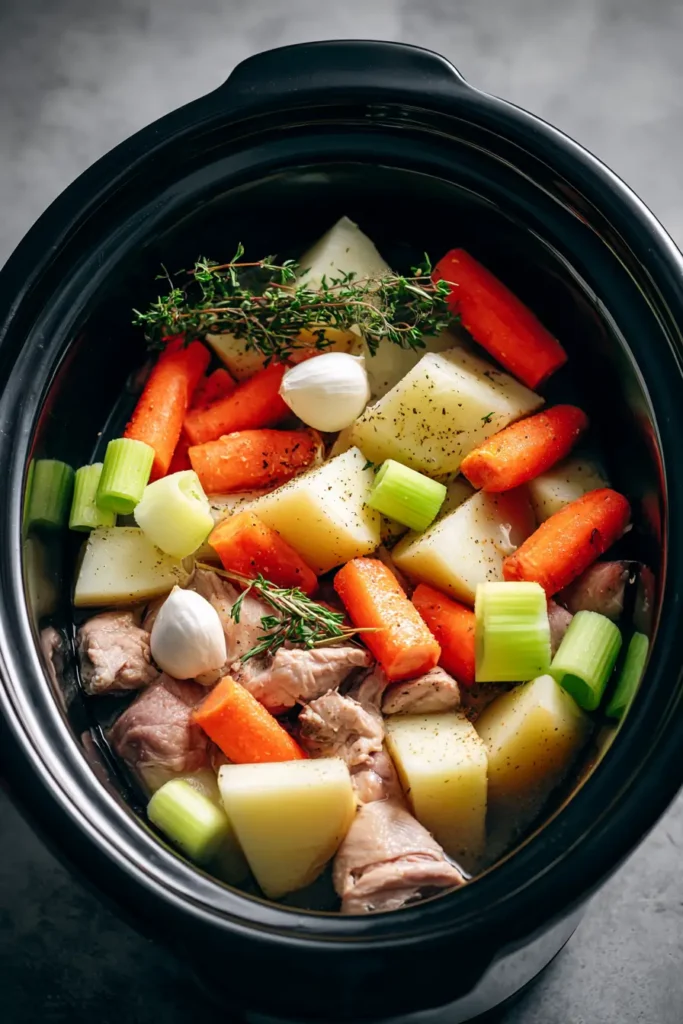
Start by washing and chopping your vegetables into uniform pieces so they cook evenly. Brown proteins like chicken, beef, or sausage in a skillet before adding them to the crockpot to boost flavor. Layering matters: place denser vegetables, like potatoes and carrots, at the bottom, then add meat and softer vegetables on top. This ensures every ingredient cooks perfectly without turning mushy.
Cooking Techniques
Most crockpot recipes offer two temperature settings: low and high. Low is perfect for 6–8 hours of slow, steady cooking, while high cooks faster in 3–4 hours. Resist the temptation to lift the lid too often, as each peek releases heat and extends cooking time. Stir occasionally if the recipe calls for it, but remember—slow and steady is the secret to tender, flavorful meals.
Flavor Tips and Tricks
Add herbs and seasonings at the start for rich flavor, but delicate herbs like parsley or basil are best added near the end to preserve their freshness. For creamy recipes, stir in dairy or cheese in the last 30 minutes of cooking.
Easy Crockpot Recipes for Busy Weeknights
Crockpot recipes are lifesavers on hectic evenings. With minimal prep and mostly hands-off cooking, you can have a warm, homemade meal ready when you walk through the door. These recipes use simple ingredients and familiar flavors, perfect for busy families or anyone looking for comfort food without the stress.
Hearty Chicken and Vegetable Stew
Combine chicken thighs, carrots, potatoes, onions, and celery with chicken broth and seasonings. Cook on low for 6–8 hours until the chicken is tender and the vegetables melt in your mouth. This one-pot meal is rich, cozy, and ideal for weeknight dinners.
Beef Brisket with Garlic and Herbs
Slow-cook a beef brisket with garlic, thyme, and bay leaves. Add a splash of beef broth and let it simmer on low for 8 hours. The result is fork-tender meat that pairs perfectly with mashed potatoes or rice.
Creamy Pasta with Chicken Sausage
Toss in sliced chicken sausage, pasta, diced tomatoes, onions, and a bit of cream or half-and-half. Cook on high for 3–4 hours, stirring once or twice. By dinner time, you’ll have a creamy, flavorful pasta dish that’s effortless and satisfying.
Tips and Tricks to Elevate Your Crockpot Recipes
Even though crockpot cooking is simple, a few thoughtful tricks can take your meals from good to unforgettable. With slow cooking, every small choice—from layering ingredients to adding seasoning at the right time—helps deepen flavor and improve texture. These tips work for beginners and seasoned home cooks who want to enhance their everyday meals with minimal effort.
Layering for Better Flavor and Texture
One of the biggest secrets to a better crockpot dish is layering ingredients correctly. Dense vegetables like potatoes and carrots should always go at the bottom since they take longer to soften. Proteins such as chicken thighs or beef brisket sit in the middle, where they can soak up juices. Softer vegetables and sauces should go on top to prevent overcooking. With this simple method, every ingredient cooks evenly and stays delicious.
Boosting Flavor Without Extra Work
Slow cookers mellow flavors, so seasoning generously at the start is key. Add spices like paprika, thyme, and garlic early, but wait until the final 30 minutes to add dairy or fresh herbs to keep them vibrant. For deeper flavor, brown meats before adding them to the crockpot. It takes a few minutes, but the payoff is worth it.
Adjusting Liquids for Perfect Results
Because crockpots trap steam, they need less liquid than stovetop recipes. Too much broth can make meals watery, so add just enough to cover the ingredients halfway. If the sauce needs thickening near the end, mix a tablespoon of cornstarch with water and stir it in during the last 15–20 minutes.
For more flavor-boosting ideas, explore our guide on Mediterranean Chicken Zucchini Bake
Storing, Freezing, and Reheating Crockpot Recipes
Crockpot meals often make generous portions, which is perfect for leftovers, weekly meal prep, or easy grab-and-heat dinners. With the right storage methods, your slow-cooked dishes can stay fresh, flavorful, and safe to enjoy throughout the week. Because crockpot recipes typically contain tender meats, hearty vegetables, and rich broths, proper handling keeps the texture and taste just as good as day one.
How to Store Crockpot Leftovers Safely
Always let your crockpot meal cool slightly before storing. Transfer leftovers into airtight containers and refrigerate within two hours of cooking to keep them safe. Most crockpot meals stay fresh for 3 to 4 days in the fridge, especially stews, soups, and shredded meats. Store sauces separately when possible, especially creamy dishes, so they don’t separate or thicken too much overnight.
Freezing Crockpot Meals for Busy Days
Many crockpot dishes freeze beautifully. Stews, chilies, shredded chicken, and beef brisket hold their texture and flavor well for up to three months. Avoid freezing meals heavy in dairy since cream-based sauces can separate. Before freezing, cool the meal completely, then store flat in freezer-safe bags or containers for easy stacking and quick thawing.
Reheating for Best Texture
Reheat refrigerated leftovers on the stovetop over medium heat, stirring occasionally until warmed through. For frozen meals, thaw in the fridge overnight before reheating. Avoid reheating dairy-heavy dishes at high heat to keep sauces smooth.
Print
Crockpot Recipes
- Total Time: 0 hours
- Yield: 6 hours 10 minutes to 8 hours 10 minutes 1x
Description
A warm, family-style chicken and vegetable stew made with simple ingredients and slow-cooked until tender. This comforting crockpot recipe is beginner-friendly, flavorful, and perfect for busy weeknights.
Ingredients
- 1.5 lbs boneless chicken thighs
- 3 cups chicken broth
- 3 carrots, sliced
- 2 potatoes, cubed
- 1 onion, chopped
- 2 celery stalks, chopped
- 2 garlic cloves, minced
- 1 teaspoon salt
- 1 teaspoon black pepper
- 1 teaspoon paprika
- 1 teaspoon thyme
- 1 bay leaf
- 1 tablespoon olive oïl
Instructions
- Place potatoes, carrots, celery, and onions at the bottom of the crockpot.
- Add chicken thighs on top of the vegetables.
- Sprinkle salt, pepper, paprika, thyme, and garlic over the chicken.
- Pour chicken broth over everything.
- Add the bay leaf.
- Cover and cook on Low for 6–8 hours or High for 3–4 hours.
- Remove the bay leaf before serving.
- Stir gently and serve warm with bread, rice, or a simple side salad.
Notes
- For a thicker stew, mash a few potatoes into the broth during the last 20 minutes.
- You can replace chicken thighs with turkey thighs or beef chuck.
- Store leftovers in the fridge for up to 4 days.
- Prep Time: 10 minutes
- Cook Time: 6–8 hours on Low (or 3–4 hours on High
Nutrition
- Serving Size: 6
FAQ About Crockpot Recipes
What is the best meat to use in crockpot recipes?
Cuts with more connective tissue work best because they break down slowly and become tender over time. Chicken thighs, beef brisket, chuck roast, and turkey thighs are excellent options. They stay juicy during long cooking times and absorb flavors well, making them perfect for soups, stews, and hearty one-pot meals.
Do you need to brown meat before adding it to the crockpot?
You don’t have to, but browning meat first adds deeper flavor and better texture. The caramelized edges create a richer base for your dish. If you’re short on time, you can skip this step, but even a quick sear for a couple of minutes can make a noticeable difference.
Can you put raw ingredients directly into the crockpot?
Yes, most crockpot recipes are designed for raw ingredients. Just follow proper layering: put firm vegetables like carrots and potatoes at the bottom and place proteins on top. This ensures even cooking and keeps delicate items from breaking down too quickly.
How much liquid should you add to crockpot meals?
Crockpots trap moisture, so you don’t need as much liquid as stovetop recipes. Usually, 1 to 1.5 cups of broth is enough for stews or meat dishes. If the recipe naturally releases liquid (like chicken or veggies), even less may be needed.
Why does my crockpot food sometimes turn out watery?
Because slow cookers create steam that stays inside, ingredients with high water content—like tomatoes, onions, and mushrooms—can release extra moisture. To fix watery dishes, remove the lid for the last 20–30 minutes or stir in a cornstarch slurry.
Conclusion
Crockpot recipes make home cooking feel effortless, cozy, and incredibly rewarding. With just a handful of simple ingredients, a few thoughtful steps, and reliable slow heat, you can create meals that taste warm, comforting, and lovingly made. Whether you’re juggling a busy schedule, feeding a hungry family, or craving a slow-simmered dinner that fills your home with delicious aromas, the crockpot always delivers. From tender meats to hearty stews to creamy pastas, the possibilities are endless and beginner-friendly.