
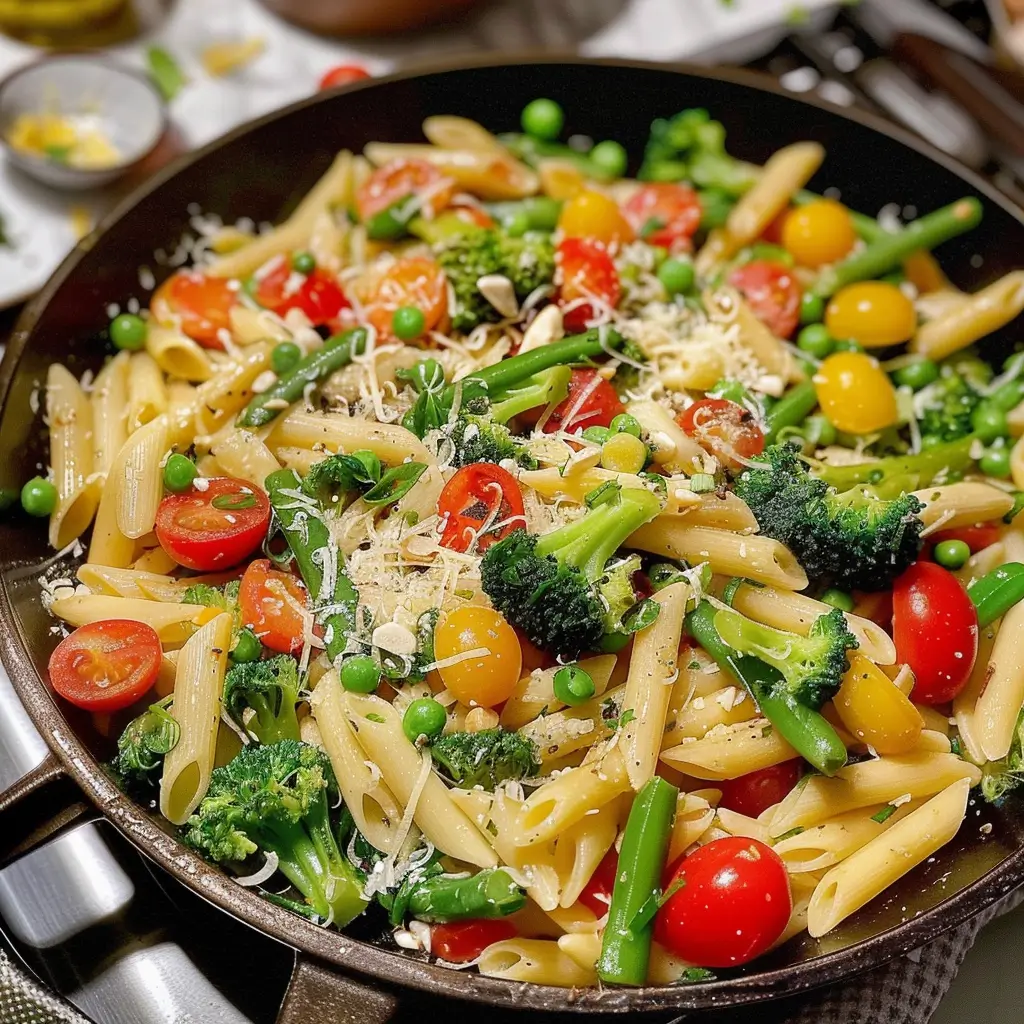
Pasta Primavera is that cheerful dish that feels like spring showed up early and decided to stay for dinner. Somewhere between boiling pasta and sautéing colorful veggies, magic happens. It’s the kind of meal that pretends to be fancy but secretly loves sweatpants. With its bright vegetables, simple sauce, and cozy flavors, Pasta Primavera proves that weeknight dinners don’t need drama to taste amazing. Even better, this Pasta Primavera recipe keeps things easy, flexible, and friendly for beginners who just want something fresh and comforting on the table.
Print
Pasta Primavera Recipe
- Total Time: 35 mins
- Yield: 4 1x
Description
This Pasta Primavera recipe is a fresh, colorful pasta dish made with tender noodles, sautéed vegetables, and a light, flavorful sauce. It’s easy to make, beginner-friendly, and perfect for busy weeknights or relaxed family meals.
Ingredients
- 12 oz pasta (penne or fettuccine)
- 3 tablespoons olive oil
- 3 cloves garlic, minced
- 1 cup bell peppers, sliced
- 1 cup zucchini, sliced
- 1 cup broccoli florets
- 1 cup cherry tomatoes
- ½ cup grated Parmesan cheese
- Salt and black pepper to taste
Instructions
- Cook pasta in salted boiling water until al dente. Reserve ½ cup pasta water and drain.
- Heat olive oil in a skillet, add garlic, then sauté vegetables until tender-crisp.
- Add pasta to the skillet, splash in pasta water, toss gently, and finish with Parmesan. Serve warm.
Notes
- Adjust vegetables based on season and taste.
- Add chicken or extra vegetables for variety.
- Prep Time: 15 mins
- Cook Time: 20 mins
Table of Contents
Pasta Primavera Recipe Overview and Origins
Pasta Primavera translates loosely to “spring pasta,” and honestly, it lives up to the name. While many assume it’s an old Italian classic, Pasta Primavera actually found fame in the USA, where cooks wanted a lighter pasta packed with vegetables. Because of that, Pasta Primavera focuses more on freshness than tradition. It uses simple pasta, seasonal vegetables, and a light sauce that lets every ingredient shine.
Pasta Primavera Ingredients and Fresh Vegetable Choices
| Ingredient | Amount | Purpose |
|---|---|---|
| Pasta (penne or fettuccine) | 12 oz | Base of the dish |
| Olive oil | 3 tbsp | Light sauce and sautéing |
| Garlic, minced | 3 cloves | Flavor foundation |
| Bell peppers, sliced | 1 cup | Sweetness and color |
| Zucchini, sliced | 1 cup | Tender texture |
| Broccoli florets | 1 cup | Fresh crunch |
| Cherry tomatoes | 1 cup | Juicy brightness |
| Parmesan cheese | ½ cup | Savory finish |
| Salt and black pepper | To taste | Balance flavors |
How to Make Pasta Primavera Step by Step
Step 1: Preparing the Pasta
To start this Pasta Primavera recipe, bring a large pot of salted water to a steady boil. Once the water is ready, add the pasta and cook it according to the package directions until al dente. Because Pasta Primavera relies on texture, slightly firm pasta works best. While the pasta cooks, stir it occasionally so it doesn’t stick. Before draining, reserve about ½ cup of the pasta water. This small step matters because the starchy water helps bind the sauce later. Then drain the pasta and set it aside, keeping it warm while you finish the vegetables.
Step 2: Cooking the Vegetables
Meanwhile, heat olive oil in a large skillet over medium heat. Add the garlic and cook briefly until fragrant, stirring so it doesn’t burn. Next, add the firmer vegetables like broccoli and carrots first, since they need more time. After a few minutes, add zucchini and bell peppers, stirring often. Because Pasta Primavera should stay bright, cook the vegetables until tender but still crisp. Finally, toss in the cherry tomatoes and cook just until they soften. Season lightly with salt and black pepper to build flavor gradually.
Step 3: Bringing Everything Together
Now add the cooked pasta directly into the skillet with the vegetables. Toss gently so everything blends well. Pour in a splash of the reserved pasta water to loosen the sauce. Finish with grated Parmesan cheese, stirring until glossy. Serve Pasta Primavera warm and fresh.
Sauce Options for Pasta Primavera
Light Olive Oil and Garlic Sauce
Pasta Primavera is known for its light, fresh sauce, and the classic version keeps things simple with olive oil and garlic. Because the vegetables bring so much flavor, this sauce gently coats the pasta without stealing the spotlight. Olive oil adds richness, while garlic gives warmth and depth. A small splash of reserved pasta water helps the sauce cling to every bite, making Pasta Primavera feel silky instead of dry. For extra brightness, a squeeze of lemon juice can be added right before serving. This option works perfectly for those who love clean flavors and want the vegetables to shine.
Creamy Pasta Primavera Sauce Variations
While the classic style stays light, some Pasta Primavera fans enjoy a creamy twist. To do this, add a small amount of heavy cream or half-and-half after the vegetables are cooked. Because balance matters, start with just a few tablespoons and stir gently. The cream softens the flavors without overpowering the vegetables. Parmesan cheese helps thicken the sauce naturally, creating a smooth, comforting finish. If you prefer a lighter creamy feel, a splash of milk works too. No matter which option you choose, Pasta Primavera remains flexible, comforting, and perfect for family-style dinners.
Pasta Primavera Variations and Add-Ins
Chicken Pasta Primavera
Pasta Primavera easily turns into a heartier meal with the addition of chicken. To make chicken Pasta Primavera, cook bite-sized chicken breast pieces in olive oil before adding the vegetables. Because timing matters, season the chicken lightly with salt and black pepper and cook until golden and fully done, then remove it from the pan. After that, prepare the vegetables as usual, and finally return the chicken to the skillet when combining everything. This method keeps the chicken juicy while letting the vegetables stay bright. Chicken Pasta Primavera works well for family dinners because it feels filling without becoming heavy, and it still keeps that fresh, colorful appeal everyone loves.
Vegetarian and Vegan Pasta Primavera
Vegetarian Pasta Primavera is already a classic, but it’s easy to adjust for vegan meals too. Simply skip the Parmesan cheese or replace it with a dairy-free alternative. Adding extra vegetables like mushrooms, spinach, or peas boosts flavor and texture. For protein, chickpeas or white beans fit nicely and keep Pasta Primavera satisfying. Because the sauce relies on olive oil and garlic, the dish stays flavorful even without dairy. Vegan Pasta Primavera proves that simple ingredients, cooked well, can deliver comfort and freshness in the same bowl.
Serving Suggestions and Pairings
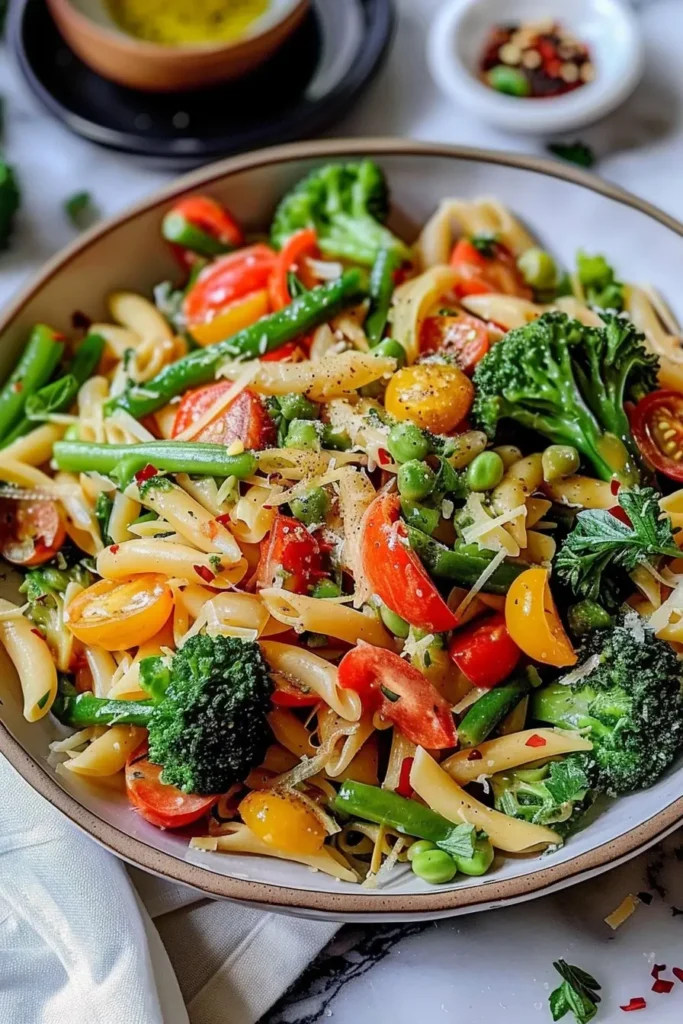
What to Serve With Pasta Primavera
Pasta Primavera stands well on its own, yet pairing it with the right sides can turn dinner into something extra special. Because Pasta Primavera is light and veggie-forward, simple sides work best. A fresh green salad with a mild dressing adds crunch without overpowering the dish. Warm garlic bread or soft dinner rolls also pair nicely, soaking up any extra sauce left on the plate. Meanwhile, roasted vegetables or steamed green beans echo the fresh flavors already in the Pasta Primavera, creating a balanced meal that feels complete and comforting.
Portion Sizes and Family-Style Tips
When serving Pasta Primavera, plan about 1½ to 2 cups per person, depending on appetites. Because the dish is colorful and inviting, serving it family-style in a large bowl encourages sharing and second helpings. Topping the Pasta Primavera with extra Parmesan at the table lets everyone adjust flavor to taste. For gatherings, keeping the pasta warm in a covered dish helps maintain texture without drying it out. Pasta Primavera fits casual dinners and special occasions alike, making it a reliable favorite for any night of the week.
Storage, Reheating, and Make-Ahead Tips
How to Store Pasta Primavera
Pasta Primavera stores surprisingly well, which makes it great for leftovers and meal prep. After cooking, let the Pasta Primavera cool slightly, then transfer it to an airtight container. Store it in the refrigerator for up to three days. Because the vegetables are lightly cooked, they hold their texture better when cooled properly. If you plan to make Pasta Primavera ahead of time, consider storing the pasta and vegetables together, but keep extra sauce or cheese separate. This simple step helps maintain flavor and texture when it’s time to reheat.
Best Way to Reheat Without Drying
When reheating Pasta Primavera, gentle heat works best. Place it in a skillet over medium-low heat and add a splash of water or olive oil to loosen the sauce. Stir often so the pasta heats evenly and doesn’t stick. If using a microwave, cover the dish and heat in short intervals, stirring between each round. Because Pasta Primavera is meant to be light and fresh, avoid overheating, which can make the vegetables too soft. With proper reheating, Pasta Primavera tastes just as comforting the next day.
Pasta Primavera FAQs
Can I make Pasta Primavera ahead of time?
Yes, Pasta Primavera can be made ahead, although it tastes best when fresh. You can cook the pasta and vegetables a few hours early and store them together in the fridge. When ready to serve, gently reheat with a splash of olive oil or pasta water to refresh the sauce and texture.
What is the best pasta shape for Pasta Primavera?
Short pasta like penne, rotini, or farfalle works very well because the vegetables and sauce cling easily. However, long pasta such as fettuccine or spaghetti also pairs nicely if you prefer a classic feel.
Is Pasta Primavera healthy?
Pasta Primavera is considered a lighter pasta dish since it’s packed with vegetables and uses a simple sauce. You can make it even healthier by using whole wheat pasta and adding extra vegetables.
Can I freeze Pasta Primavera?
Freezing is not recommended because the vegetables can become soft and watery when thawed. Refrigeration works much better for maintaining flavor and texture.
Conclusion
Pasta Primavera is proof that simple ingredients can create a comforting, colorful, and satisfying meal. With fresh vegetables, tender pasta, and a light yet flavorful sauce, this dish fits perfectly into busy weeknights and relaxed family dinners. Because Pasta Primavera is flexible, you can adjust vegetables, sauces, and add-ins to match your taste and pantry. Whether you keep it classic or add chicken or creamy touches, Pasta Primavera always feels fresh and welcoming. Once it becomes part of your routine, it’s likely to stay there as a trusted, feel-good favorite.