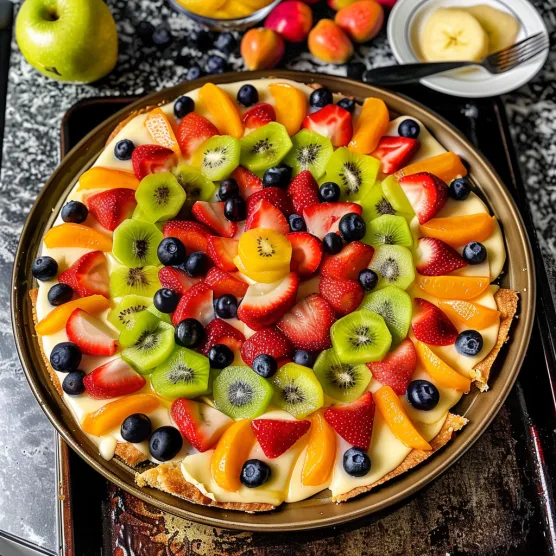
If you’re searching for a stunning dessert that tastes as incredible as it looks, this fruit pizza recipe is your answer. Perfect for summer gatherings, birthday parties, or simply when you’re craving something sweet and refreshing, this colorful treat combines a soft sugar cookie crust, creamy frosting, and fresh fruit toppings.
Understanding the Perfect Cookie Crust Foundation
Why the Cookie Base Matters
The foundation of any exceptional fruit pizza recipe starts with the cookie crust. Unlike traditional pizza dough, this dessert base requires a tender, slightly sweet cookie that can support the weight of creamy frosting and juicy fruit without becoming soggy. The key lies in achieving the right texture—not too crispy, yet firm enough to hold everything together. Moreover, the buttery flavor of the cookie base complements the tanginess of cream cheese frosting beautifully. When you bite into a properly baked crust, it should offer a gentle resistance before melting in your mouth. Additionally, the sugar cookie base provides a neutral canvas that allows the vibrant colors of fresh fruit to truly shine.
Achieving the Ideal Cookie Texture
Creating the perfect texture requires attention to several crucial factors. First and foremost, your butter must be softened to room temperature—not melted, but soft enough to cream easily with sugar. This process incorporates air into the dough, resulting in a lighter texture. Furthermore, avoid overmixing once you add the flour, as this develops gluten and creates a tough, chewy cookie instead of a tender one. The dough should come together just until combined. Another important tip involves chilling the dough briefly if it seems too soft to handle. However, don’t over-chill, as this makes rolling difficult. Finally, baking at the correct temperature ensures even cooking throughout, preventing burnt edges and raw centers.
Mastering the Cream Cheese Frosting Layer
The Secret to Smooth, Spreadable Frosting
The frosting layer in this dessert pizza recipe serves multiple purposes beyond adding sweetness. Primarily, it acts as a moisture barrier between the cookie crust and fresh fruit, preventing sogginess. Additionally, the tangy cream cheese balances the sweetness of the cookie and fruit perfectly. To achieve the smoothest consistency, start with cream cheese that’s been sitting at room temperature for at least an hour. Cold cream cheese creates lumps that are nearly impossible to eliminate. Meanwhile, gradually incorporate the powdered sugar to avoid a grainy texture. The addition of whipped topping lightens the mixture, making it easier to spread and more pleasant to eat. As a result, you’ll get a fluffy, cloud-like layer that complements every component.
Spreading Techniques for Even Coverage
Applying the frosting evenly requires patience and the right tools. Use an offset spatula for the best control, starting from the center and working your way outward. This method ensures consistent thickness across the entire surface. In addition, make sure your cookie base has cooled completely before frosting—warm cookies will melt the cream cheese, creating a mess. Leave a small border around the edges for a professional appearance. Subsequently, you can smooth the surface with your spatula dipped in warm water. This trick eliminates any visible spatula marks and creates a pristine canvas for your fruit arrangement. Remember, the frosting should be thick enough to hold fruit but not so thick that it overwhelms the other flavors.
Ingredients
| Ingredient | Quantity |
|---|---|
| All-purpose flour | 2 cups |
| Unsalted butter (softened) | ¾ cup |
| Granulated sugar | ¾ cup |
| Large egg | 1 |
| Vanilla extract | 1 teaspoon |
| Baking powder | 1 teaspoon |
| Salt | ¼ teaspoon |
| Cream cheese (softened) | 8 oz |
| Powdered sugar | ½ cup |
| Cool Whip or whipped cream | 8 oz |
| Fresh strawberries | 1 cup (sliced) |
| Fresh blueberries | 1 cup |
| Kiwi fruit | 2 (peeled and sliced) |
| Mandarin oranges | 1 cup (drained) |
| Apricot preserves | ¼ cup |
| Water | 2 tablespoons |
Selecting and Preparing Fresh Fruit Toppings
Choosing the Best Fruit Combinations
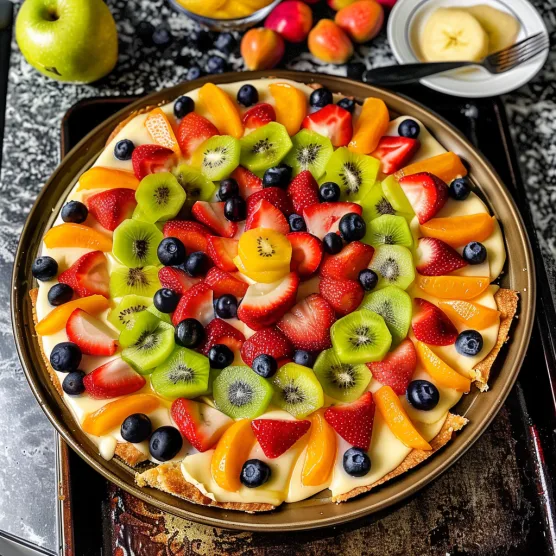
Selecting the right fruits transforms a good dessert into an extraordinary one. Opt for fruits that are in season, as they’ll have the best flavor and texture. Strawberries, blueberries, and kiwi are classic choices that provide beautiful color contrast. However, you can also experiment with raspberries, blackberries, or sliced peaches. Bananas work wonderfully but should be added just before serving to prevent browning. Grapes, both red and green, add pops of color and require no preparation. Mandarin oranges contribute sweetness and a gorgeous golden hue. Meanwhile, avoid fruits with high water content like watermelon, as they’ll make your pizza soggy. The goal is creating visual appeal while maintaining structural integrity throughout serving time.
Proper Fruit Preparation Methods
Preparing fruit correctly ensures both beauty and food safety. Wash all fruits thoroughly under cold running water, even those you’ll peel. Pat them completely dry with paper towels, as excess moisture leads to soggy frosting. For strawberries, remove the stems and slice uniformly for consistent appearance. Blueberries should be sorted, removing any soft or damaged ones. Kiwis require peeling and slicing into thin rounds or half-moons. If using canned mandarin oranges, drain them thoroughly and pat dry. Some bakers prefer using a paper towel-lined plate to dry canned fruits for several minutes. This extra step prevents unwanted liquid from seeping into your carefully crafted dessert. Additionally, prepare fruits just before arranging to maintain freshness and prevent oxidation.
Creative Fruit Arrangement Patterns
Traditional Circular Design Approach
The most classic way to arrange fruit on your pizza involves creating concentric circles, starting from the outer edge. Begin with a border of sliced strawberries around the perimeter, creating a vibrant red frame. Next, add a circle of kiwi slices, followed by blueberries, then mandarin oranges. This pattern continues toward the center, where you can place a single strawberry or cluster of blueberries as a focal point. The circular method creates a visually balanced dessert that’s pleasing from every angle. Moreover, it ensures each slice contains a variety of fruits. This arrangement works particularly well for round pizza pans or cookie sheets. The symmetry appeals to both children and adults, making it perfect for parties and celebrations.
Modern Rainbow and Abstract Designs
For a contemporary twist, consider arranging fruits in rainbow stripes or abstract patterns. Rainbow designs involve placing fruits in color order—red strawberries, orange mandarins, yellow pineapple, green kiwi, and blue blueberries. This creates a stunning visual effect that’s incredibly popular on social media. Alternatively, try a scattered, random arrangement for a more casual, rustic appearance. Some creative bakers create shapes like hearts, stars, or flowers using strategically placed fruit. Kids especially love when you arrange fruits to form their favorite characters or animals. Regardless of your chosen pattern, aim for full coverage with minimal frosting showing through. The more colorful and abundant the fruit, the more impressive your final presentation will be.
Applying the Glaze for Professional Finish
Why Glaze Makes a Difference
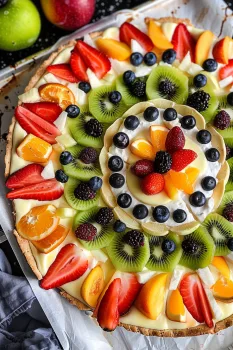
Adding a glaze to your fruit pizza recipe isn’t just about aesthetics—it serves practical purposes too. The glaze creates a protective layer that keeps fruit from drying out and oxidizing. Furthermore, it adds a subtle sweetness and beautiful shine that makes your dessert look professionally made. Apricot preserves work wonderfully because they’re clear when strained and don’t overpower other flavors. The glaze also helps fruit adhere to the frosting, preventing pieces from sliding off when sliced. In restaurants and bakeries, this finishing touch separates amateur attempts from professional creations. The glossy appearance catches light beautifully, making your dessert irresistible in photographs. Additionally, the glaze slightly enhances the natural fruit flavors without masking them.
Proper Glaze Application Technique
Applying glaze correctly requires a gentle touch and the right consistency. Start by heating apricot preserves with a small amount of water in a microwave or small saucepan. Stir until smooth, then strain through a fine-mesh sieve to remove any fruit chunks. The glaze should be thin enough to brush on but thick enough to coat evenly. Using a soft pastry brush, gently dab the glaze over each piece of fruit, being careful not to disturb your carefully arranged pattern. Work quickly, as the glaze begins setting as it cools. Don’t apply too much—you want a light, even coating rather than a heavy, syrupy layer. Once glazed, your fruit pizza will maintain its fresh appearance for several hours, even at room temperature.
Storage and Serving Best Practices
Optimal Storage Methods
Proper storage extends the life of your fruit pizza while maintaining quality. Ideally, this dessert tastes best when consumed within 24 hours of assembly. Store covered in the refrigerator, but avoid plastic wrap directly touching the fruit, as condensation causes sogginess. Instead, tent aluminum foil loosely over the top, or use a cake carrier with a dome lid. The cookie crust can be baked and stored at room temperature for up to three days before assembly. Similarly, prepare the frosting a day ahead and refrigerate in an airtight container. However, add fruit and glaze only a few hours before serving for optimal freshness. If you must store assembled pizza overnight, place toothpicks strategically in the frosting to prevent the covering from touching the fruit.
Serving Temperature and Portion Sizes
Fruit pizza tastes most delicious when served slightly chilled but not ice-cold. Remove it from the refrigerator about 15-20 minutes before serving, allowing the flavors to develop fully. The frosting becomes more spreadable and pleasant at this temperature, while the cookie crust loses its refrigerator-induced firmness. For cutting, use a sharp pizza cutter or large knife, wiping it clean between slices for neat edges. Standard servings typically range from 12-16 slices, depending on the size of your pan. Consider your audience when determining portion sizes—children may prefer smaller pieces, while adults often enjoy larger servings. Present slices on small dessert plates with forks, as eating fruit pizza can be slightly messy. This elegant approach transforms a casual dessert into something special.
Frequently Asked Questions
Can I make fruit pizza ahead of time?
Yes, you can prepare components ahead, but complete assembly should happen closer to serving time. Bake the cookie crust up to three days in advance and store at room temperature in an airtight container. Prepare the frosting one day ahead and refrigerate.
What’s the best way to prevent a soggy crust?
Preventing sogginess involves several key steps. First, ensure your cookie crust cools completely before adding frosting. The cream cheese layer acts as a moisture barrier, so spread it evenly with no gaps. Pat all fresh fruit completely dry before arranging.
Can I use frozen fruit instead of fresh?
While fresh fruit is always preferred for best texture and appearance, frozen fruit can work in a pinch. Thaw frozen fruit completely and drain thoroughly, then pat very dry with paper towels. Be aware that previously frozen fruit releases more moisture and may have a softer texture.
How do I transport fruit pizza to a party?
Transporting fruit pizza requires careful planning. Keep it refrigerated until the last possible moment before leaving. Use a sturdy, flat carrier or large baking sheet that prevents sliding. If your pizza is on a disposable pan, place it inside a larger box for support.
What fruits should I avoid using on fruit pizza?
Certain fruits don’t work well due to high water content or quick oxidation. Avoid watermelon, which releases excessive juice and makes everything soggy. Skip bananas unless adding immediately before serving, as they brown quickly.
Conclusion
Creating a beautiful fruit pizza recipe doesn’t require professional baking skills—just quality ingredients, patience, and attention to detail. This versatile dessert adapts to any occasion, from casual family dinners to elegant celebrations. The combination of buttery cookie crust, tangy cream cheese frosting, and fresh fruit creates a harmonious blend of flavors and textures that delights everyone.
Print
Fruit Pizza Recipe
- Total Time: 35 minutes
- Yield: 12 servings 1x
- Diet: Vegetarian
Description
A stunning dessert featuring a soft sugar cookie crust, creamy frosting, and colorful fresh fruit toppings. Perfect for parties and celebrations.
Ingredients
- 2 cups all-purpose flour
- ¾ cup unsalted butter (softened)
- ¾ cup granulated sugar
- 1 large egg
- 1 teaspoon vanilla extract
- 1 teaspoon baking powder
- ¼ teaspoon salt
- 8 oz cream cheese (softened)
- ½ cup powdered sugar
- 8 oz Cool Whip or whipped cream
- 1 cup fresh strawberries (sliced)
- 1 cup fresh blueberries
- 2 kiwi fruit (peeled and sliced)
- 1 cup mandarin oranges (drained)
- ¼ cup apricot preserves
- 2 tablespoons water
Instructions
- 1. Preheat oven to 350°F. Cream together softened butter and granulated sugar until light and fluffy, about 3 minutes.
- 2. Beat in egg and vanilla extract until well combined.
- 3. In a separate bowl, whisk together flour, baking powder, and salt. Gradually add to butter mixture until just combined.
- 4. Press dough evenly into a greased 12-inch pizza pan or large baking sheet, creating a ½-inch thick layer.
- 5. Bake for 12-15 minutes until edges are lightly golden. Cool completely on a wire rack.
- 6. Beat cream cheese and powdered sugar until smooth. Fold in whipped topping until combined.
- 7. Spread frosting evenly over cooled cookie crust, leaving a small border around edges.
- 8. Arrange fresh fruit in desired pattern over frosting layer.
- 9. Heat apricot preserves with water until smooth, strain, and gently brush over fruit.
- 10. Refrigerate for at least 1 hour before serving. Cut into slices and serve chilled.
Notes
Store covered in refrigerator for up to 24 hours. Add fruit and glaze only a few hours before serving for best results. Cookie crust can be baked 3 days ahead and stored at room temperature.
- Prep Time: 20 minutes
- Cook Time: 15 minutes
- Category: Dessert
- Method: Baking
- Cuisine: American
Nutrition
- Serving Size: 1 slice
- Calories: 285
- Sugar: 22g
- Sodium: 180mg
- Fat: 15g
- Carbohydrates: 35g
- Fiber: 2g
- Protein: 4g